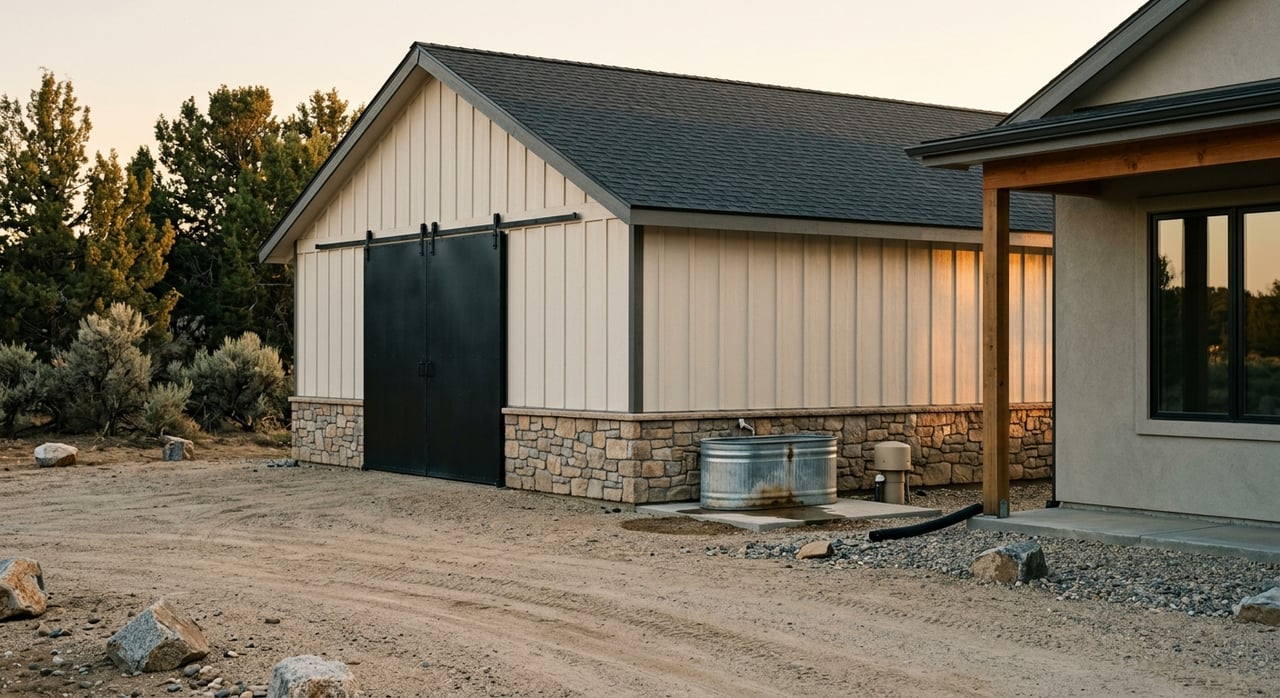
Buy Horse Property in Dewey-Humboldt With Confidence
March 26, 2026
March 26, 2026
If your perfect day starts with an early ride and ends with quiet desert views, Dewey-Humboldt may be on your short list. It offers rural elbow room close to Prescott’s amenities, but buying horse property here takes careful planning. Lot size, zoning, well rules, and even legacy mining issues can affect whether a property truly works for you and your horses.
In this guide, you will learn how local zoning translates to animal allowances, what to know about wells in the Prescott Active Management Area, what to test for in water and soil, and how to budget for fencing and infrastructure. You will also get a practical due diligence checklist you can use before lifting contingencies. Let’s dive in.
Dewey-Humboldt blends rural acreage with access to larger trail systems in the greater Prescott area. Many properties sit on usable land with wide-open views. The community is also near public lands, including Prescott National Forest, which offers a range of trail opportunities for riders.
The local climate is semi-arid. That means smart water planning and realistic pasture expectations. Most small-acreage owners rely on hay and supplemental feed rather than year-round grazing. With the right setup, though, you can create safe turnout, efficient water use, and a low-maintenance routine for your horses.
Yavapai County uses zoning districts paired with a density number to set minimum lot sizes, setbacks, and permitted uses. Always confirm the exact Zoning–Density for a parcel in the county’s records before you assume you can keep horses.
As a rule of thumb, farm animals are allowed at a minimum of about 70,000 square feet, which is roughly 1.61 acres, in some zoning combinations. In others, the threshold is about 35,000 square feet, which is roughly 0.80 acres. These thresholds help determine when you can keep larger animals without a special use permit. The full code, and your parcel’s density details, still apply. Review the county’s current Planning and Zoning Ordinance and verify your parcel’s designation before you make an offer. You can find the ordinance in the county’s official document library in the section titled Planning and Zoning Ordinance.
If you plan boarding, breeding, or lessons beyond what the county treats as residential and noncommercial, expect permit review and possible conditions.
For clarity on setbacks, accessory structures, and animal allowances, start with the county materials in the current ordinance. Review the Planning and Zoning Ordinance published by Yavapai County Development Services. You can access it here: the county’s Planning and Zoning Ordinance PDF.
Parts of Dewey-Humboldt fall within the Prescott Active Management Area. AMAs are regions where the Arizona Department of Water Resources manages groundwater more closely.
All Arizona wells fall under the Arizona Department of Water Resources. Within the Prescott AMA, you should expect AMA-specific rules and forms for new wells, along with standard ADWR steps. Before you write an offer, look up any existing well on the parcel using the ADWR Well Registry. The registry often lists depth, driller, and date.
Dewey-Humboldt includes the Iron King Mine and Humboldt Smelter Superfund site area. EPA and the state have documented elevated arsenic and lead in soil and, in some areas, groundwater. If you are buying anywhere in town, require a well water lab panel that tests for arsenic, lead, nitrate, and total coliform or E. coli. Consider radon, TDS, iron or manganese, and sulfate as well. If you are near the mapped mine, smelter footprint, or affected drainages, add targeted heavy-metals testing for both water and soil.
If results show contaminants above health-based guidance, you will need treatment or an alternate water source. Get quotes for point-of-entry or point-of-use systems, and factor in maintenance costs.
Design your system around the total daily demand for your horses, your household, and your facilities. A reasonable planning range is about 5 to 20 gallons per horse per day, with many owners using 10 to 15 gallons per day per adult horse as a baseline. Hot days, lactation, or heavy work increase demand. For full context and conservation ideas, review guidance for better water management for horse facilities.
Well yield needs vary with your setup. Many small horse properties target a reliable flow in roughly the 8 to 12 gallons per minute range. Larger facilities often plan for 15 to 25 gallons per minute or combine wells and storage. Include a storage tank, pressure tank, and a backup power plan so you can keep water flowing during outages.
Most rural properties use onsite wastewater systems. Before you remove contingencies, order a site evaluation and percolation test with a licensed provider. Yavapai County Environmental Services outlines the septic permit process, application forms, and inspection steps. Start with the county’s Septic System Construction page to understand how the county reviews soils, alternative systems, and permitting.
Wildfire is also part of rural risk planning. Dewey-Humboldt participates in local defensible-space efforts. Budget for fuel reduction, access improvements, and any fire department turnaround requirements for trailers and emergency vehicles. A past town newsletter issue highlights local efforts around defensible space and fire readiness.
Safe horse fencing is visible, smooth, and strong where it matters most. Extension guidance suggests a top rail roughly at withers height for many horses, which is around 54 to 60 inches, smooth rails to prevent snags, and reinforced corners and gates. Electric can help with respect for fences, but it is rarely recommended as the only perimeter barrier. Plan gate widths for maintenance equipment and trailers, and follow county guidance near public roads.
Fence costs vary with material, terrain, and labor. Simple wire or cross fencing can be on the low end, while post and rail, vinyl, or pipe can run into the teens or $20 to $35 or more per linear foot installed in many markets. Get itemized bids for perimeter lines and paddock divisions, plus gates and corner bracing.
In temperate climates, 2 to 3 acres per horse can sometimes sustain grazing, but Arizona’s semi-arid rangelands produce less forage. Most owners rely on hay year-round unless they have irrigated pasture or large acreage. Plan for rotational paddocks, a sacrifice area for wet or muddy weather, and hay storage that protects feed from sun and rodents.
Automatic waterers, wash racks, and arena watering add to daily demand. Include these in your well sizing and storage plan. Develop a manure management routine that controls runoff and protects groundwater. This typically involves collection, composting, and periodic hauling.
Well drilling costs depend on depth and geology. Arizona averages vary widely, and rocky conditions in the Bradshaw foothills can add to cost. Many sources cite ranges of roughly $25 to $65 per foot for a typical domestic well, with complete residential projects often totaling several thousand dollars to $15,000 to $25,000 or more depending on depth, casing, pump, and any water treatment. Always request multiple local bids and require a pumping test before closing. For a broad overview of residential well costs, see this guide to domestic well pricing.
Fencing can run from a few dollars per linear foot for basic materials to $20 to $35 or more per foot for higher-end options. Barn plumbing, automatic waterers, and small storage tanks can add several thousand dollars depending on complexity.
Septic system costs vary by soils, size, and whether an alternative system is required. The county’s septic pages outline the approval process so you can scope design needs early.
Use this list as a contract and due diligence roadmap. Turn items into contingencies where needed.
Buying horse property is part lifestyle and part logistics. You deserve an advocate who knows the local code, understands AMA well issues, and can walk you through water testing, septic steps, and infrastructure planning. Our team brings more than 30 years of local experience and a track record that includes 1,000-plus transactions and over $300 million in sales. We combine that depth with a boutique, concierge approach so you get clear answers and a smooth path to closing.
If Dewey-Humboldt is on your radar, let’s talk through your goals, your horses’ needs, and your timeline. We can line up parcel-level research, coordinate well and septic vendors, and preview properties that fit how you actually live. Ready to get started? Reach out to the Tim Eastman Group through our website and connect with Tim Eastman today.
Stay up to date on the latest real estate trends.
Search by Features
Golf Community
New Construction
Gated Community
Separate Guest House
Search by Neighborhood
Tim Eastman stands out in the Prescott, AZ real estate market by providing unparalleled local insights and a personalized approach to each client’s journey. His dedication to excellence and deep market knowledge ensures that your living begins here with the utmost confidence and ease.