Chino Valley Investment Property Guide for Smart Strategies
April 2, 2026
April 2, 2026
Thinking about investing in Chino Valley? You are not alone. This Yavapai County town offers a very different profile than a fast-moving metro market, and that matters if you are weighing rentals, flips, or manufactured homes. With the right strategy, Chino Valley can offer opportunity, but success here depends on local fit, careful underwriting, and a clear understanding of zoning and permit rules. Let’s dive in.
Chino Valley is a smaller, lower-density market with a 2024 population estimate of 13,911. The town has grown 6.9% since 2020, but it still feels stable rather than high churn. That stability shows up in the housing profile too.
According to the same Census profile, 83.1% of housing is owner-occupied, and 90.9% of residents lived in the same house one year earlier. In plain terms, people tend to stay put. For you as an investor, that can mean lower turnover, a more deliberate resale market, and fewer easy assumptions about quick exits.
The town’s 2040 General Plan adds important context. Chino Valley wants to protect property rights, preserve its rural small-town character, and manage growth carefully. It also notes that manufactured homes made up 44% of all homes in 2020, which makes factory-built housing a normal and established part of the local market.
If you are looking at buy-and-hold rentals, Chino Valley may be most appealing as a steady, conservative play rather than a rapid scale market. The local housing base is heavily owner-occupied, and public data does not show high rental turnover. That means you should focus on realistic rent expectations and long-term durability.
Zillow’s March 2026 rental snapshot for Chino Valley shows an average asking rent of $2,250 across all property types, with asking rents ranging from $725 to $2,595. It also shows average asking rents of $1,475 for two-bedroom homes, $2,250 for three-bedroom homes, and $2,350 for four-bedroom homes.
That same Zillow page lists only 9 active rentals and labels the market as “cool.” On its own, that is not a vacancy rate. Still, when you combine those signals with the town’s high owner-occupancy and low mobility, it suggests a market with limited rental inventory and modest turnover.
It is also important to read rent data carefully. Census reports a 2020-2024 median gross rent of $1,248, but that number reflects occupied units, not current asking rents. Zillow’s figures reflect listings on the market right now, so the two sources measure different things and should not be treated as direct apples-to-apples comparisons.
For a simple, rough benchmark, using Zillow’s $2,250 average asking rent and Redfin’s median sale price of $437,250 produces an illustrative gross rent-to-price ratio of about 6.2%. That is only a broad estimate because the rental sample is small and the data sources use different methods, but it does help frame expectations.
In this kind of market, the most straightforward rental strategy is often a single-family home that matches local demand and avoids overcomplication. Chino Valley is dominated by single-family living patterns, especially around SR-89, so practical homes with functional layouts may be easier to evaluate than niche properties.
Before you buy, pay close attention to:
House flipping in Chino Valley can work, but it is not a market that rewards loose numbers or over-improving a property. According to Redfin’s February 2026 market data, Chino Valley is “somewhat competitive,” with a median sale price of $437,250, median days on market of 73, 19 homes sold, and a 98.3% sale-to-list ratio.
That tells you the resale market is active, but not especially fast. Buyers are present, yet the numbers suggest you need to price carefully and keep your renovation scope aligned with what the market will support.
Based on the local profile, light-fixer opportunities may offer the best fit. Homes with cosmetic wear, deferred maintenance, or outdated finishes may be easier to reposition than properties with major unknowns.
In Chino Valley, due diligence goes beyond paint color and flooring. Rural housing patterns make items like septic systems, site access, and permit history especially important. If a project includes unpermitted work or site complications, your budget and timeline can change quickly.
If you are evaluating a fix-and-flip, be especially careful with:
A flip can still pencil out here, but Chino Valley is better suited to disciplined investors than speculative ones.
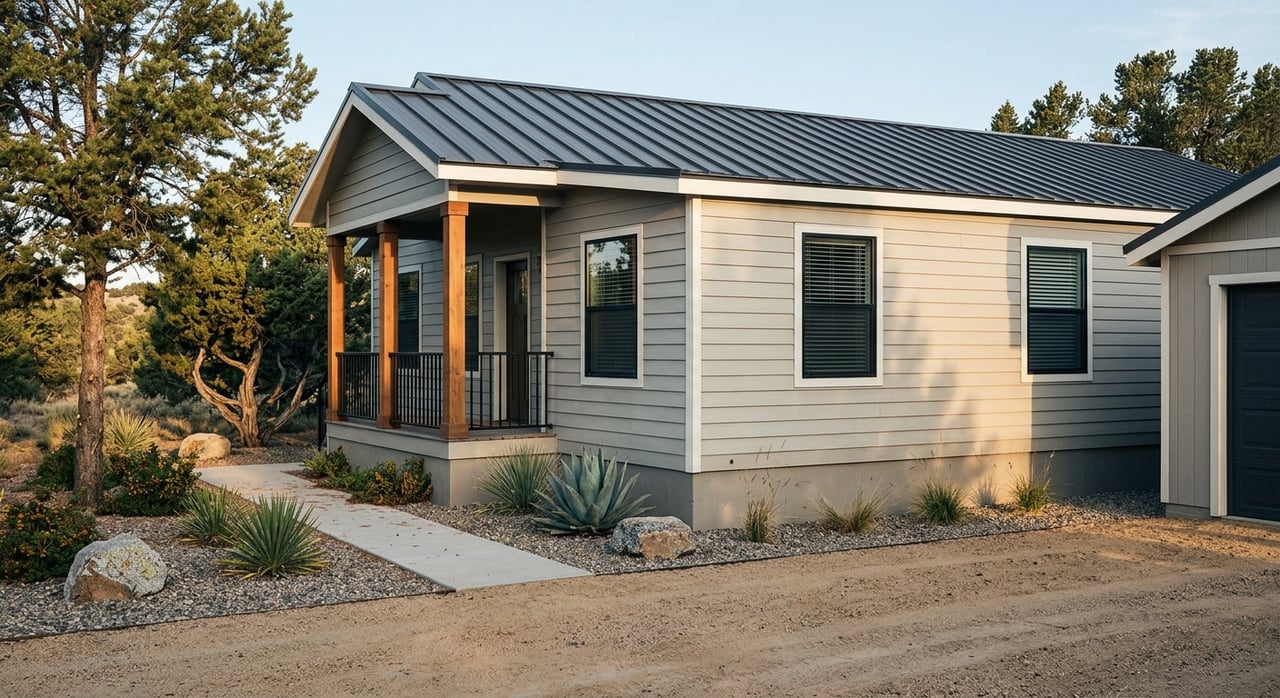
Manufactured homes deserve serious attention in Chino Valley because they are not a fringe product type here. The town’s General Plan says they represented 44% of all homes in 2020, which is a major share of the market. That creates opportunities for investors who understand the rules and the product.
For some buyers and renters, manufactured homes can offer a lower entry price and a practical path into the market. For investors, that can mean value-add potential, lower acquisition costs, or a broader pool of property types to consider.
This is where many investors get tripped up. Chino Valley treats manufactured homes differently from modular homes, and the town ordinance says park model trailers are restricted to mobile home parks, RV parks, and trailer parks. You should not assume any factory-built home can be placed on any lot.
The town’s manufactured-home checklist is specific. It requires an online permit, a site plan showing distances to property lines and nearby structures, septic or utility approval, a driveway plan, installer licensing, business-license information, subcontractor licenses, and title or registration documents for used units.
The same checklist says a manufactured home must:
Jurisdiction matters. If the parcel is inside town limits, Chino Valley rules apply. If it is outside town limits and under county jurisdiction, you need to review Yavapai County manufactured and modular permit requirements.
The county says permits are required before installation of residential manufactured, modular, or factory-built buildings. It also states that pre-HUD mobile homes cannot be installed on an individual lot, and park models need a permit and cannot be more than five years old at installation.
If you own both the land and the manufactured home, Yavapai County says you may file an Affidavit of Affixture. That process changes the home from personal property to real property.
This can affect financing, resale, and long-term exit planning. If manufactured-home investing is part of your strategy, this is one of the details worth addressing early, not late.
No matter which strategy you prefer, parcel-level due diligence is essential in Chino Valley. The town’s Zoning page explains that the UDO regulates permitted uses, conditional uses, setbacks from property boundaries, building heights, density, and other requirements.
That means you should never assume a property will work for a rental, a flip plan, or a manufactured-home placement without checking zoning first. What seems simple in a listing can become more complicated once you review actual parcel restrictions and permit requirements.
A practical due-diligence checklist should include:
Chino Valley looks most attractive for investors who prefer a measured approach. The data points to a conservative environment with owner-heavy tenure, moderate sales activity, and meaningful regulation. That does not remove opportunity, but it does reward patience and planning.
Here is a simple way to think about fit:
| Strategy | Best Fit in Chino Valley | Main Watch-Out |
|---|---|---|
| Single-family rental | Investors seeking steady, practical buy-and-hold opportunities | Limited turnover and careful rent assumptions |
| Light fixer flip | Investors who can manage scope and price discipline | Septic, access, permits, and slower resale timing |
| Manufactured home | Investors comfortable with factory-built housing rules and land-specific review | Placement, permitting, and title treatment |
If you want the shortest learning curve, single-family rentals may be the easiest place to start. If you want a lower-entry or value-add angle, manufactured homes can be compelling, but only if you understand the regulatory side. If you want to flip, look for clean, manageable projects instead of heavy rehabs.
In a market like Chino Valley, local knowledge is not just helpful. It is part of the investment strategy. You need to know how town and county rules differ, how manufactured homes are treated, and how a slower-moving resale market changes your margin for error.
That is where experienced local guidance can make a real difference. If you are exploring investment property in Chino Valley, Tim Eastman can help you evaluate opportunities with a grounded view of the local market, property types, and due-diligence issues that matter most.
Stay up to date on the latest real estate trends.
Search by Features
Golf Community
New Construction
Gated Community
Separate Guest House
Search by Neighborhood
Tim Eastman stands out in the Prescott, AZ real estate market by providing unparalleled local insights and a personalized approach to each client’s journey. His dedication to excellence and deep market knowledge ensures that your living begins here with the utmost confidence and ease.