Designing For Dells Views: Windows, Light And Privacy
October 16, 2025
October 16, 2025
You love the rugged desert views at Cliffs at North Canyon, but the sun and close-by neighbors can make windows a daily tradeoff between light, heat, and privacy. In attached homes and smaller lots, getting it right matters for comfort and resale. This guide shows you how to frame the view, tame the heat, and keep privacy while staying within HOA rules and tapping local rebates. Let’s dive in.
Cliffs at North Canyon was largely built in the mid‑1980s, so many homes have mature trees, shared amenities, and attached façades. Views and sightlines vary by building, so start with a quick site audit. Note which windows face south, east, west, and north, and photograph glare at different times of day. Map nearby sightlines from sidewalks, courtyards, and pools to spot privacy hot spots.
If you plan exterior shading, size overhangs and screens to the sun you actually get. A solar position tool can help you understand seasonal sun angles for your exact address.
Phoenix’s hot desert climate sees intense sun and long cooling seasons. The biggest issue is solar heat gain, especially from low-angle east and west sun. Focus on glazing and exterior shade that cut heat before it reaches the glass. Climate data for Phoenix confirms sunshine is abundant, so prioritize heat control while preserving daylight.
Before you shop, learn three key window metrics on NFRC labels:
For North Phoenix, you generally want a lower SHGC to limit heat while keeping a decent VT for your view. The U.S. Department of Energy explains these ratings in plain terms on its window performance guide.
For rooms where the view matters, choose spectrally selective low‑e glazing. It lets in more visible light while blocking a lot of the sun’s heat. Lawrence Berkeley National Laboratory outlines how these coatings work in its overview of spectrally selective glazings. In most homes here, a quality double‑pane low‑e IGU balances performance and cost.
East and west exposures are the toughest for glare and late-day heat. Favor lower SHGC glass and add exterior measures like vertical fins, retractable awnings, or solar screens. Exterior shading blocks heat before it hits glass and typically outperforms interior shades, as noted in this summary on daylight and energy.
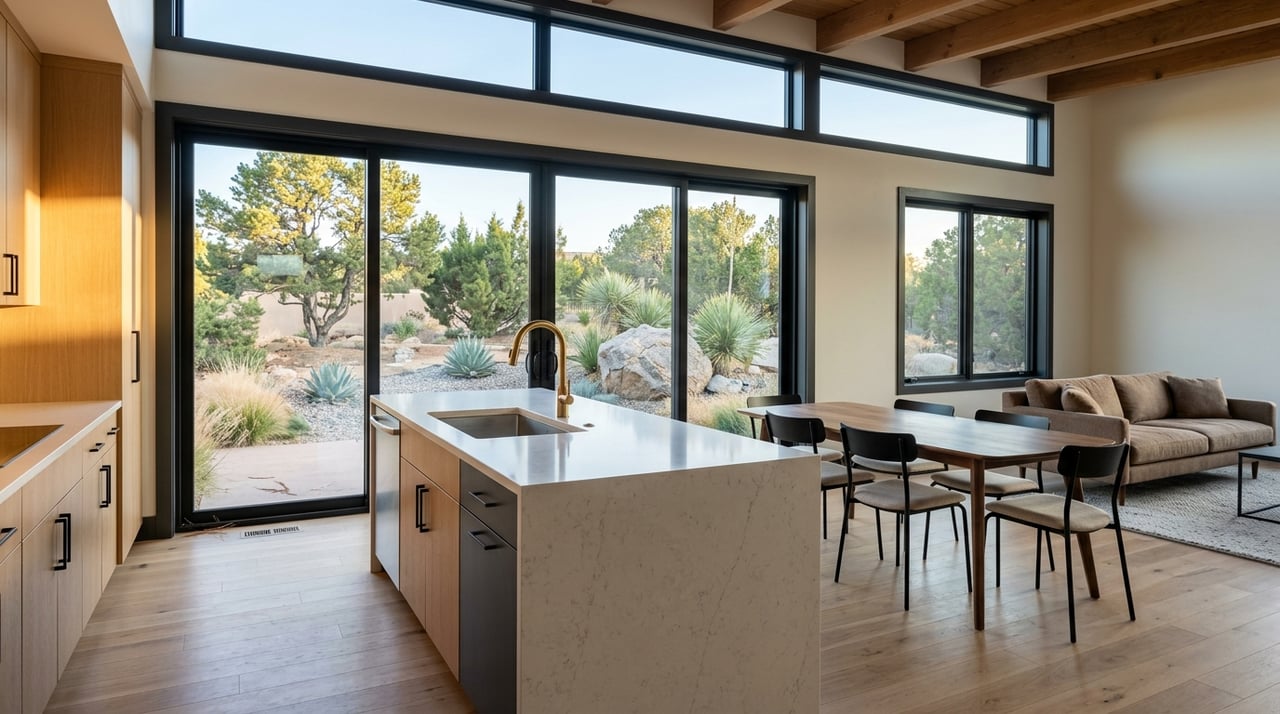
On south-facing walls, you can invite daylight while reducing direct glare. Consider clerestory windows or a light shelf paired with a properly sized overhang. The GSA’s SFTool explains how daylight and views strategies work and why sizing and placement matter in sunny climates.
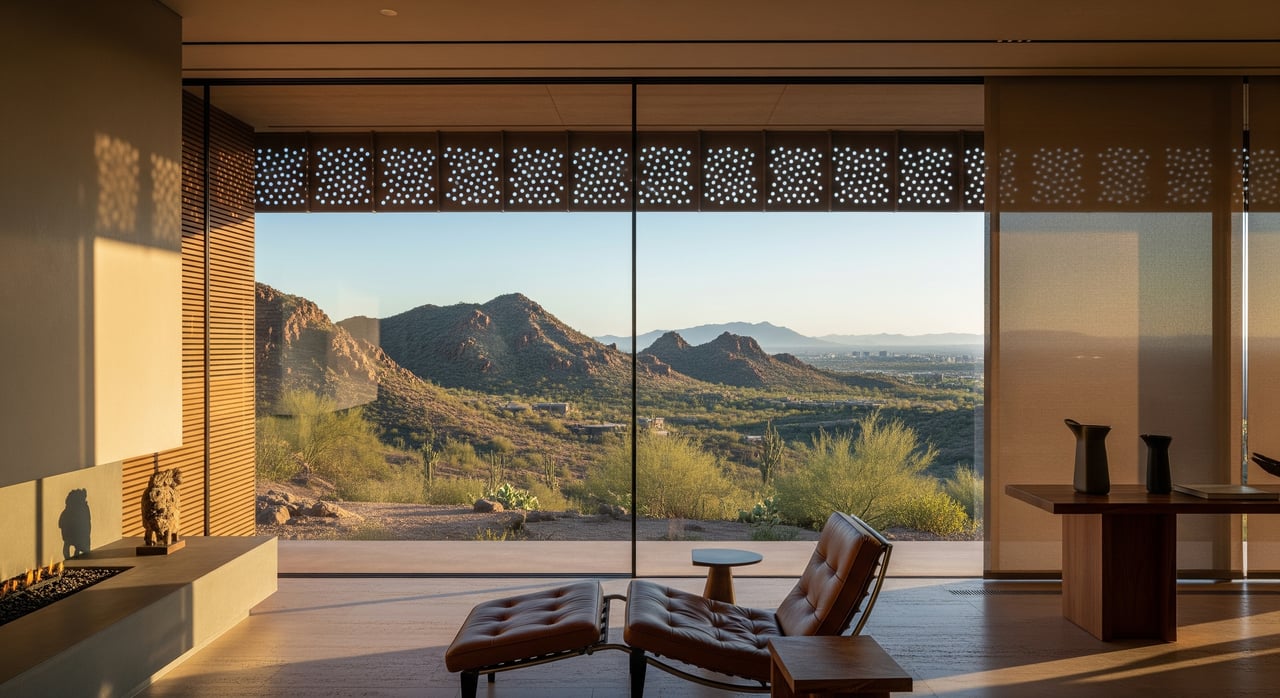
You can keep the distant desert backdrop while blocking close sightlines. A simple approach is clear glass up high for the view and daylight, with frosted or fritted glass on the lower portion to protect privacy at eye level. Thoughtful patterns also help reduce glare. See examples of layered privacy in this overview on daylighting and glare control.
Exterior roller screens give you control at the push of a button. Lower them for privacy and heat control, then raise them to open the view when the sun shifts.
Landscape can be a quiet privacy screen that also cools your home. Use desert-adapted trees and shrubs in layers so they block views into living areas but keep sightlines to distant scenery. The University of Arizona offers local guidance and plant lists in its Maricopa County xeriscape resources.
Plant shading trees where they help most, typically on the south, east, and west. Many local utilities, including SRP, have offered free shade tree programs and planting guidance. Give trees proper setbacks so they shade windows without crowding structures or views.
Cliffs at North Canyon has HOA oversight. Most exterior changes visible from common areas, including screens, window film, window replacements, and some plantings, require prior approval. You can review community specifics on the Cliffs at North Canyon HOA resource page, then confirm with your association’s CC&Rs and Architectural Review rules.
For permits and energy requirements, Phoenix has adopted updated construction codes, including the 2024 Phoenix Building Construction Code based on the latest I‑Codes. Window enlargements or structural changes usually require permits and must meet energy, safety, and egress rules. Check the City’s building code page before you start.
Finally, explore utility incentives. SRP has offered residential rebates for shade screens and films, along with an ENERGY STAR window replacement rebate. Start with SRP’s window replacement rebate page and review current rules, eligible products, and deadlines.
In Cliffs at North Canyon, your best results come from a simple formula: control heat at the glass, layer privacy at eye level, and preserve the view above it. With the right glazing, smart exterior shading, and desert-wise plants, you can enjoy bright rooms, lower cooling loads, and comfortable privacy year-round. If you’re planning a move or thinking about how these choices play into resale, reach out for perspective on what buyers value in today’s market.
Ready to compare homes and features across neighborhoods? Connect with Tim Eastman for friendly, expert guidance and a personalized plan.
Stay up to date on the latest real estate trends.
Search by Features
Golf Community
New Construction
Gated Community
Separate Guest House
Search by Neighborhood
Tim Eastman stands out in the Prescott, AZ real estate market by providing unparalleled local insights and a personalized approach to each client’s journey. His dedication to excellence and deep market knowledge ensures that your living begins here with the utmost confidence and ease.