Buying Land In Paulden: Access, Utilities And Next Steps
July 2, 2026
July 2, 2026
Buying land in Paulden can feel simple at first glance. You find a parcel with open space, big skies, and room to build, and it is easy to picture what comes next. But raw land has its own checklist, especially in unincorporated Yavapai County, where access, utilities, and permit review can shape what is realistic. If you are thinking about a Paulden lot, this guide will help you understand the key issues to verify before you close. Let’s dive in.
Paulden is a census-designated place in unincorporated Yavapai County. In practical terms, that means Yavapai County is the main local authority for zoning, permits, roads, septic, floodplain review, and building oversight for most raw land questions.
That matters because a parcel that looks buildable online may still need separate review for driveway access, wastewater, floodplain constraints, grading, or building permits. Yavapai County routes much of this through its Development Services process, so it helps to think of land buying as a step-by-step verification process instead of a quick yes-or-no decision.
Before you focus on house plans or timelines, start with the parcel itself. Your first goal is to confirm what the land is, how it is zoned, and what county records show.
Yavapai County’s GIS map is a useful first pass because it can display zoning, water district information, fire district data, street improvement districts, and some permit history. At the same time, the county notes that map and parcel information is believed to be accurate but is not guaranteed, so recorded documents still need to be reviewed carefully.
A strong early review should include:
If you are buying with plans to divide land later, zoning and subdivision rules become even more important. Yavapai County’s Planning and Zoning Ordinance and Subdivision Regulations guide lot size, setbacks, land divisions, and related land-use questions.
Access is one of the biggest issues for raw land buyers in Paulden. A parcel can appear to touch a road or show an easement in records, but that does not always mean the access works the way you expect.
Yavapai County states that it does not have the capability to research the legal status of every roadway. The county also notes that recording an easement does not guarantee access to a county road. That is why title review and a survey matter so much before closing.
When you evaluate access, you want to answer a few separate questions:
For land divisions, the county raises the bar even further. A Minor Land Division application for five or fewer parcels when any resulting parcel is 10 acres or less requires documentation such as a preliminary title report, legal descriptions, access and utility easements, and a surveyor’s statement about whether the lot has physical access traversable by a two-wheel-drive passenger vehicle.
If your future driveway or roadway connection will intersect a maintained county right-of-way, Yavapai County requires an Access and Drainage Permit. That permit can include conditions tied to sight distance, drainage, traffic control, and surfacing.
This is one reason access should be checked early, not late. Even if the parcel itself is attractive, the road entry requirements can affect cost, timing, and site design.
Some Paulden parcels are reached by unnamed easements or private roads. If a property needs an address in that setting, Yavapai County’s Addressing Unit assigns addresses and names private easements, and a road naming application must be completed before an address can be assigned.
That may sound like a small detail, but it can affect planning, utility coordination, and the overall path toward development. On raw land, even simple administrative steps can shape the timeline.
Utilities are another major part of land due diligence. In Paulden, the right answer depends on the specific parcel, not just the general area.
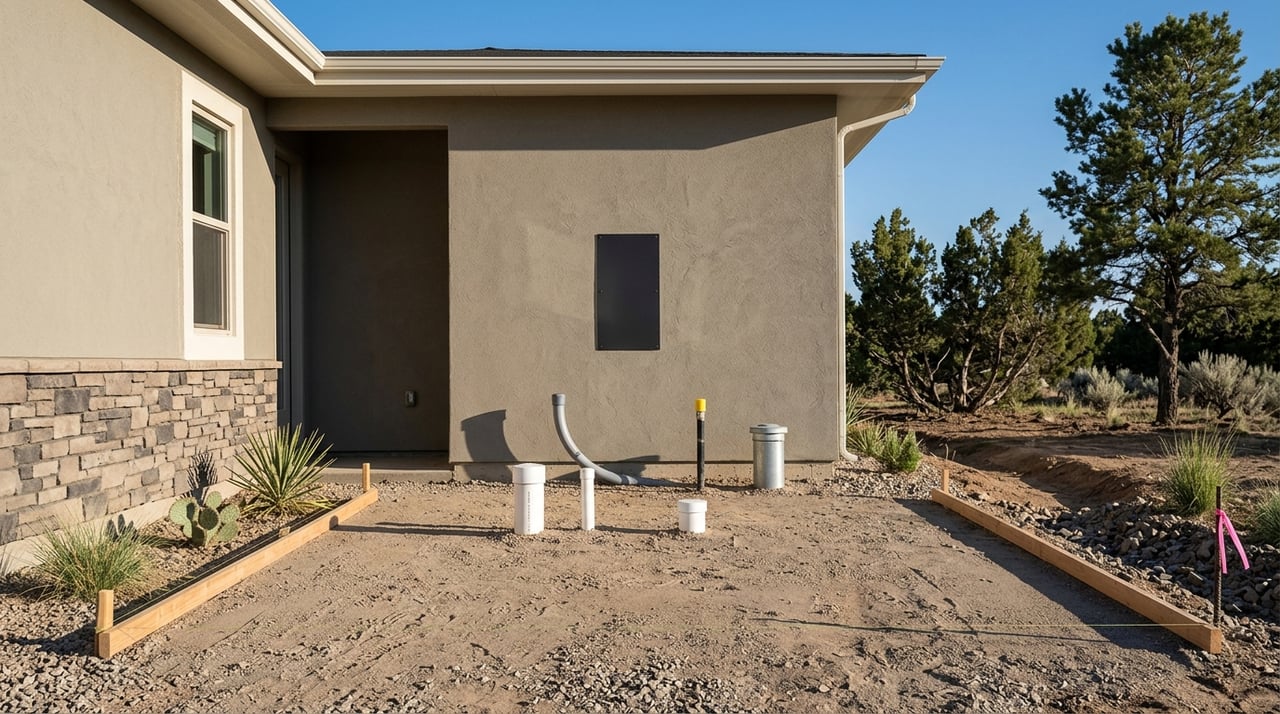
You will want to confirm water, wastewater, and power plans as early as possible. Assumptions can get expensive on vacant land.
If you hope to connect to water service, verify the actual provider for the parcel. The Arizona Corporation Commission says its Utilities Division can identify the regulated utility serving an address. It also notes that municipal systems are regulated locally, while private water and wastewater companies fall under the Commission.
Abra Water identifies itself as serving Paulden, but parcel-level service still needs to be confirmed. In other words, nearby service does not automatically mean your lot has a straightforward connection option.
If public water is not available, a well may be part of your plan. In Arizona, the Arizona Department of Water Resources regulates groundwater wells.
Before drilling, deepening, or modifying a well, a Notice of Intent to Drill must be filed, and the work must be done by a licensed well driller. For domestic use on parcels of 5 acres or fewer, the applicable county or local health authority must review the application before it is submitted to ADWR.
ADHS also recommends testing a new well for:
It also recommends annual testing for total coliform bacteria and nitrates. That testing is an important part of understanding long-term water quality, not just water availability.
For many land buyers in Paulden, septic is the likely wastewater path. Yavapai County requires a permit to construct a septic system, and a new system may need a site inspection or perc test to determine whether the property is suitable.
The county also notes that it does not provide sewer information, so if sewer service is being considered, buyers need to contact the local service provider directly. This is another reason not to assume that nearby development means the same utility setup is available for your parcel.
Paulden land buyers should check floodplain status early in the process. Dry washes and flood-prone areas can affect where and how you build, as well as what reports or professional help may be required.
Yavapai County Flood Control regulates all unincorporated areas of the county. In floodways, certain flood-fringe areas, approximate Zone A areas, and other higher-risk settings, an Arizona registered engineer may be required.
In FEMA or county flood hazard areas, a surveyor-completed elevation form may also be required. If a home will be financed with a federally backed loan and sits in a Special Flood Hazard Area, flood insurance requirements can also be triggered.
Some buyers are looking for more than a homesite. You may be thinking about dividing land for future flexibility, investment, or a family build plan.
In Yavapai County, a Minor Land Division permit is required for five or fewer parcels when any resulting parcel is 10 acres or less. The process involves more than sketching lot lines. The county looks for title work, legal descriptions, access and utility easements, and other supporting documentation.
It is also important to know that Minor Land Division approval does not itself create the new parcels. The recorded documents create the split, and the Assessor’s Office updates tax parcel records after the recorded paperwork is in place.
When you buy land, the smartest move is to verify the biggest risk items first. That helps you avoid spending time and money on a parcel that may not fit your plans.
A practical sequence for Paulden land buyers looks like this:
That order lines up well with Yavapai County’s one-stop permit structure and the separate county offices involved in roads, environmental review, flood control, and building safety.
Raw land purchases usually go more smoothly when you bring in the right professionals before closing, not after. The exact team depends on the parcel, but a few specialists are especially helpful.
You may want to line up:
This kind of early coordination can save you from buying a parcel first and discovering the real constraints later. It can also help you budget more accurately for the true cost of building.
In unincorporated Yavapai County, building and grading permits are required. Current permit submissions must comply with the 2024 codes and newly adopted ordinances effective January 1, 2026.
That does not mean every parcel is difficult. It means the right land purchase is the one where your intended use, access, utility plan, and permit path all line up clearly.
If you are considering land in Paulden, a careful review up front can help you move forward with confidence. And if you want local guidance on evaluating parcels, access questions, or the practical differences between one homesite and another, connect with Tim Eastman.
Stay up to date on the latest real estate trends.
Search by Features
Golf Community
New Construction
Gated Community
Separate Guest House
Search by Neighborhood
Tim Eastman stands out in the Prescott, AZ real estate market by providing unparalleled local insights and a personalized approach to each client’s journey. His dedication to excellence and deep market knowledge ensures that your living begins here with the utmost confidence and ease.